Faculty of Integrative Health, Wellness and Natural Therapies · Complementary Health · Energetic Bodywork
EHMT – Energetic Healing Massage & Therapy
A two-year programme in energetic and holistic bodywork, in four consecutive levels, taught hybrid: online teaching combined with classroom practical training.
About this programme
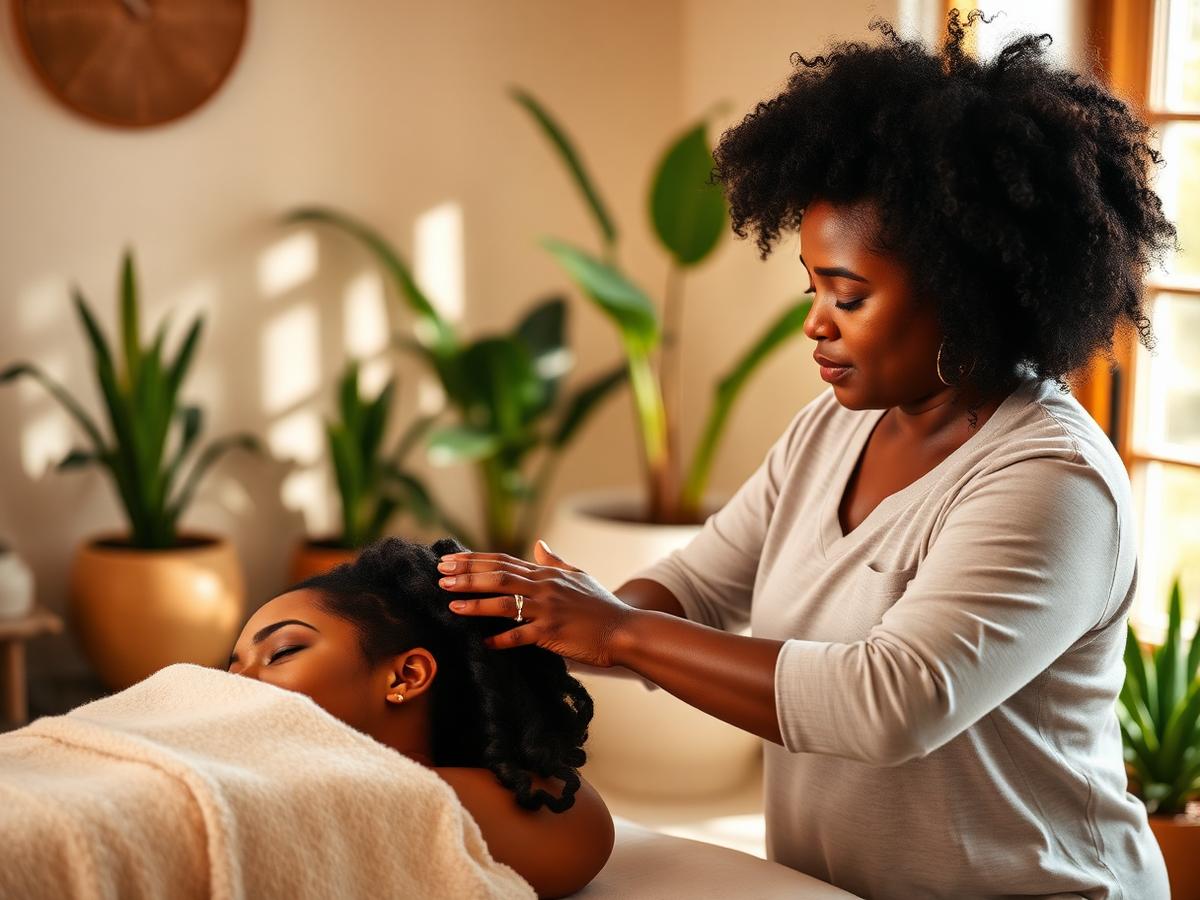
Luis Brion University (LBU) and EHMT have entered into a collaboration to jointly offer and further develop the programmes in Energetic Healing Massage & Therapy (EHMT). EHMT is a holistic treatment method in which the human body is approached as one coherent whole. Body awareness, energetic perception, balance, professional guidance and personal development are central to the method. The programme consists of four consecutive levels and is offered as a two-year route. Teaching is hybrid: a combination of online teaching, self-study, practice assignments and classroom practical training. Within the EHMT method the body is regarded as one energetic system. The starting point is that a person's core energy does not increase or decrease, but can at certain moments concentrate more strongly in specific parts of the body, so that other areas function less optimally in energetic terms. Someone under prolonged mental strain or stress, for example, may be perceived within EHMT as a strong concentration of energy around the head while other areas show less energetic activity. EHMT therefore focuses on perceiving and guiding the flow of energy through the entire body. The aim is not to add energy to a person or to take energy away, but to guide the energy that is present towards a more balanced distribution, working together with the body's natural intelligence and self-regulating processes.
Who is this for?
This programme is intended for:
- Students from 18 years of age who want to develop in energetic and holistic bodywork
- Students under 18 only with parental consent
- People who are prepared to invest in their own professional and personal development alongside the subject matter
- Practitioners in massage, bodywork or complementary health who want a structured, multi-year route
- Anyone who wants to work with clients in a professional, ethical and clearly bounded way
What you will be able to do
- Describe, explain and professionally substantiate the theoretical principles, vision, development and methodology of EHMT
- Scan the entire body systematically according to the EHMT method and recognise, distinguish, record and interpret perceptions within the limits of the method
- Prepare, carry out, complete and evaluate a full EHMT treatment independently, safely, methodically and professionally
- Use the energetic distribution perceived within EHMT to guide the flow of energy methodically through the entire body
- Recognise the energy centres and energetic pathways used within EHMT and their interrelation, and apply them responsibly in treatment
- Carry out a professional intake, gather relevant information, obtain informed consent and inform the client clearly about the nature, working method, possibilities and limits of EHMT
- Deal professionally and respectfully with physical integrity, sensitive body areas, personal boundaries, privacy, confidentiality and possible vulnerability of clients
- Design, carry out, adjust and evaluate EHMT guidance trajectories independently on the basis of systematic observation and professional reasoning
- Analyse more complex cases from different perspectives and make well-founded professional choices within your own competence
- Distinguish EHMT perceptions from medical and psychological diagnostics and recognise in time when treatment is not responsible or when consultation with or referral to a qualified healthcare professional is necessary
- Document treatments, observations, evaluations and professional considerations systematically and carefully
- Reflect critically on your own professional practice, personal convictions, boundaries, communication and influence on the treatment process
- Recognise, analyse and act on professional and ethical dilemmas in accordance with the EHMT professional and conduct code
- Collect, assess and use relevant professional literature and other sources critically in support of professional practice
- Carry out practice-based research: formulate a relevant research question, gather data systematically and analyse and present the results critically
- Evaluate the quality of your own EHMT practice systematically and develop proposals for improving professional practice and the EHMT method
- Collaborate professionally and communicate clearly with clients, fellow practitioners and, where appropriate, professionals from other disciplines
- Take responsibility for continuing personal and professional development and acquire new knowledge and skills independently
- Guide other EHMT practitioners within the authorisations granted, give feedback and contribute to knowledge transfer and quality development
- Analyse, substantiate, justify and present your own professional practice at bachelor level, orally and in writing
Programme content
- 01Level 1 – Foundation: the vision and background of EHMT, energetic body awareness, systematically scanning the entire body, recognising and distinguishing energetic perceptions, basic knowledge of energy centres and energetic pathways, communication with the client, personal boundaries, informed consent, ethics and professional attitude, personal development and self-reflection
- 02Level 1 in practice: the student learns to scan the body systematically with the hands held approximately five to a maximum of ten centimetres from the body, perceiving differences in warmth, cold, tingling, concentration or absence of energetic activity — perceiving without judging and strictly distinguishing findings from medical diagnosis
- 03Level 2 – Practitioner: using scan findings methodically, performing the EHMT strokes and treatment techniques, guiding energy systematically through the entire body, observing reactions during a treatment, building up and completing a treatment professionally, intake and evaluation, careful reporting, safeguarding professional boundaries and taking responsibility for your own practice
- 04Levels 1 and 2 together form the first phase of the programme and are built at Associate Degree level
- 05Level 3 – Professional: carrying out full EHMT treatments independently, analysing more complex cases methodically, designing and evaluating guidance trajectories, deepened energetic perception, professional reporting, case discussion, ethical dilemmas, professional decision-making, intervision and supervision, reflection, massage and the use of pressure points, conducting conversations, recognising the limits of your own expertise, collaboration and responsible referral, and practice-based, inquiry-led work
- 06Level 4 – Advanced Professional: complex case analysis, independently designing, substantiating and evaluating EHMT trajectories, evidence-informed and practice-based work, critical assessment of sources, practice-based research, quality development, professional ethics, exploring your own talent and turning it into professional practice, professional responsibility, method development, presenting and accounting for professional practice, and guiding and supporting other EHMT practitioners
- 07Levels 3 and 4 together form the deepening professional phase and are developed at bachelor level
- 08Throughout the programme: practice assignments, treatments, case reports and a personal portfolio
- 09Safety, ethics and professional integrity: physical integrity, professional boundaries including trauma-related boundaries and conditions, informed consent, confidentiality and privacy, respectful communication, dealing with sensitive body areas, preventing transgressive behaviour, professional distance and closeness, recognising contra-indications, the limits of your own expertise, referral, professional ethics, complaints and professional responsibility
Teaching methodology
EHMT is a practice-oriented programme, which is why different forms of teaching are deliberately combined. Online teaching is used for theoretical knowledge, assignments, case material, preparation, reflection and guided study. Classroom sessions focus on practical skills, scanning, treating, practising with fellow students, observation, direct feedback, intervision and assessment. Alongside this, the student works on practice assignments, treatments, case reports and a personal portfolio, so that theory, practice and personal development are continuously connected. A full EHMT treatment covers the entire body, because the energetic pathways and energy centres are seen as part of one whole. That requires not only technical skill but a high degree of professionalism, integrity and respect for physical boundaries. From the start, students therefore learn to communicate transparently about what an EHMT treatment involves: what EHMT is, how a treatment is carried out, that the entire body is included in the energetic treatment, which forms of touch and energetic guidance are applied, how sensitive and personal body areas are handled, and how a client can make personal boundaries known beforehand. Treatment takes place voluntarily and with the informed consent of the client, and during the treatment it is regularly checked whether the client feels comfortable.
Assessment
Students are assessed not only on what they know and can do technically, but also on the way they carry their professional responsibility. Professional attitude, reliability, integrity, communication, self-reflection and professional conduct are part of the assessment from Level 3 onwards in particular. Because the EHMT method is connected to the practitioner's own development, the programme is a continuous learning path in which growth, awareness, self-reflection and deepening are central. Completing the theoretical and practical components alone does not automatically entitle a student to certification if the established requirements for professional and ethical conduct are not met.
Entry requirements
Admission from 18 years of age; students under 18 only with parental consent. From Level 2 onwards additional requirements may apply, including a certificate of good conduct (VOG) appropriate to working with clients in a care and welfare context, compliance with the EHMT code of conduct and demonstrable professional attitude. Each level builds on the preceding level.
Important conditions
- EHMT is not a substitute for necessary medical or psychological diagnosis and treatment. An EHMT practitioner does not make a medical diagnosis on the basis of EHMT and gives no guarantees about healing.
- A full EHMT treatment includes the entire body. Clients are informed in advance about the working method, the forms of touch used and how sensitive body areas are handled, and treatment only takes place with informed consent.
- Additional requirements may apply to admission and certification from Level 2 onwards, including a certificate of good conduct (VOG) appropriate to working with clients within a care and welfare context, compliance with the EHMT code of conduct, and demonstrably meeting the requirements for professional attitude.
- Levels 1–2 are built at Associate Degree level and Levels 3–4 at bachelor level in terms of content; this indicates the level of the content and is not a claim to an accredited degree.
For administrative review: Content on this page is sample copy unless confirmed. Check study load, entry requirements, tuition and certification wording with LBU administration before publication.
Luis Brion University reserves the right to change, amend or withdraw the texts on this website, program content, curricula and learning outcomes at any time.